
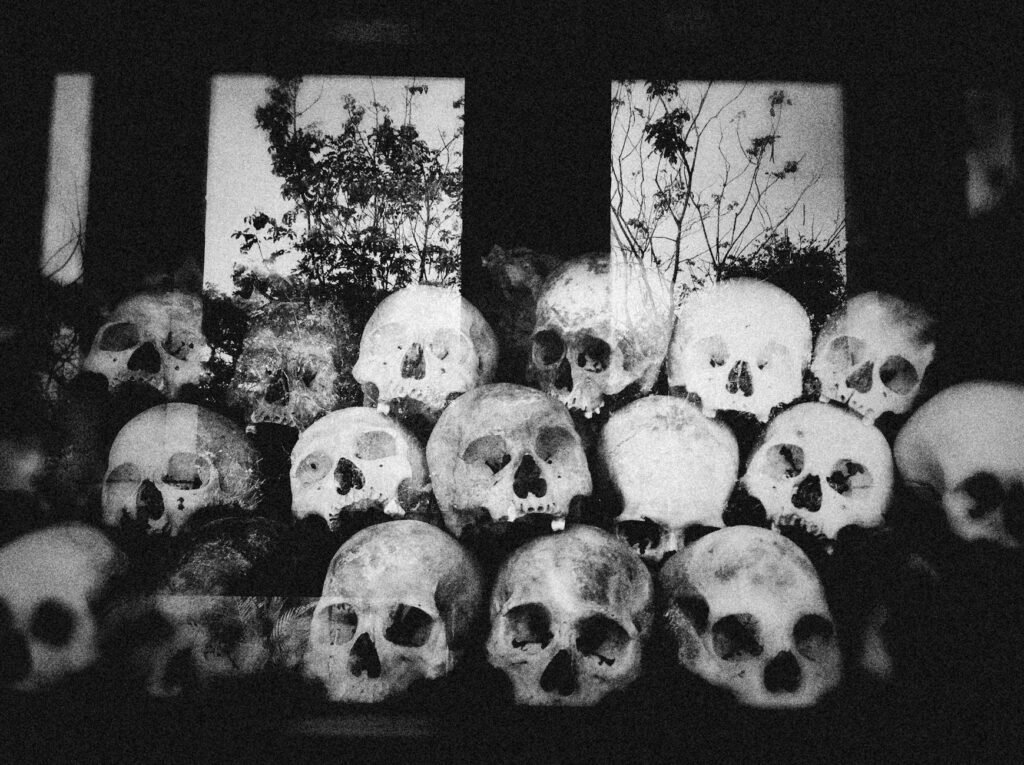
How Power Was Built on Blood
Empires have shaped the world in ways both magnificent and terrifying. They built monuments, created laws, advanced technologies, and connected continents. But behind every shining monument was the shadow of conquest—brutal force, fear, and unimaginable violence. Today, we explore 12 of the most brutal empires in world history, empires whose rise to power was soaked in blood and whose legacy still echoes across time.
This article is brought to you by the Yekare History Shop, your home for Africa-inspired clothing, mugs, apparel, and historical merchandise. If you love powerful stories from the past, wear your history proudly—visit the store today and support our work.
Let’s begin.
1. The Assyrian Empire — Masters of Psychological Terror
The ancient Assyrians were not just warriors; they were engineers of fear. Their empire, centered in Mesopotamia, became infamous for its systematic brutality. When they conquered a city, they made sure the world heard about it.
Assyrian inscriptions boast about:
- Flaying enemies alive, stretching their skin across city walls
- Impaling rebels on tall stakes
- Stacking heads like pyramids at city gates
- Deporting entire populations to break resistance
To the Assyrians, terror was a weapon as important as the sword. Their strategy worked—people surrendered long before Assyrian armies even arrived.
2. The Mongol Empire — Death from the Steppes
The Mongol Empire, led by Genghis Khan, became the largest land empire in history. Their expansion was fast, ruthless, and often apocalyptic.
Mongol brutality included:
- Mass exterminations of resisting cities
- Using captured civilians as human shields
- Executing entire towns if a single person resisted
- Spreading terror intentionally to force mass surrenders
One Mongol commander famously said:
“The greatest joy is to crush your enemies and hear the cries of their women.”
By some estimates, Mongol conquests caused 40 million deaths, reshaping entire civilizations.
3. The Roman Empire — Cruelty in the Name of Order
Rome mastered the art of civilization through domination. While known for laws, architecture, and roads, Rome also enforced its rule through chilling brutality.
Rome’s tools of terror included:
- Crucifixion (their most feared punishment)
- Gladiator games where humans were torn apart for entertainment
- Slavery on an industrial scale
- Genocidal campaigns like the destruction of Carthage
- The suppression of revolts, like the Jewish Revolt, which ended with Jerusalem burning
Rome promised peace—the famous Pax Romana—but it was a peace built on broken bones.
4. The Aztec Empire — Ritual Death on a Massive Scale
The Aztecs built a powerful empire in Mesoamerica, but they also turned human sacrifice into a system of state control.
At the height of their power:
- Tens of thousands were sacrificed yearly
- Hearts were cut out while victims were alive
- Bodies were thrown down temple steps
- Captives were forced into “flower wars,” battles fought solely to capture humans for sacrifice
For the Aztecs, the sun itself needed blood to rise. Their empire stood on a foundation of ritual killing.
5. The Ottoman Empire — The Grey Wolves of Eurasia
The Ottoman Empire lasted over 600 years, but its history is filled with brutal episodes.
These include:
- Devshirme: the forced seizure of Christian boys, taken from their families to become soldiers (Janissaries)
- The Armenian Genocide, where up to 1.5 million Armenians were killed
- Berserkers like the Akinjis, who terrorized villages
- Brutal suppression of uprisings across Europe and the Middle East
The Ottomans combined administrative brilliance with ruthless military force, creating one of the world’s most feared empires.
6. The Belgian Congo — Colonialism at Its Most Inhuman
Perhaps the most brutal colonial regime in African history was King Leopold II’s personal empire in the Congo.
At least 10 million Africans died through:
- Forced labor
- Starvation
- Mass executions
- Mutilations (especially the infamous cutting off of hands)
Entire villages were wiped out for failing rubber quotas. Photos of children with severed hands shocked the world and remain some of the most disturbing colonial evidence humanity has ever seen.
7. The Qin Dynasty — China Forged by Iron and Fire
The Qin Dynasty (221–206 BCE) unified China but did so with terrifying force.
Under Emperor Qin Shi Huang:
- Over 400 scholars were buried alive
- Books were burned to eliminate opposition
- Citizens were executed for minor crimes
- Forced labor built the first Great Wall, where hundreds of thousands died
- Cities that resisted were massacred wholesale
Qin unified China—but the price was paid in bones.
8. The Nazi Empire — One of History’s Darkest Chapters
The Third Reich remains a symbol of pure, systematic evil. The Nazis combined industrial efficiency with racial hatred to create a machine of death.
Their brutality included:
- The Holocaust, killing 6 million Jews
- Mass murder of Roma, Slavs, disabled people, and political dissidents
- Human experimentation in camps like Auschwitz
- The invasion of Europe, killing tens of millions
- Ruthless occupation policies meant to enslave entire nations
The Nazi Empire raised questions humanity still grapples with: How can everyday humans commit such evil?
9. The British Empire — A Global Empire Built on Exploitation
The British Empire was the largest ever built, but behind its polished image was a brutal reality.
Examples of British imperial brutality include:
- Famines caused by colonial policies in India (over 20 million deaths)
- The extermination of Indigenous Tasmanians
- Concentration camps during the Boer War
- Economic destruction of colonized regions
- Suppression of uprisings in Kenya, Sudan, Ireland, and India
The empire that claimed to bring “civilization” often delivered death and poverty instead.
10. The Spanish Empire — Gold, Guns, and God
Spain’s empire expanded across the Americas through conquest and devastation.
Spanish brutality included:
- The destruction of the Aztec and Inca empires
- Forced labor systems like the encomienda, which killed millions
- Torture during the Inquisition
- Mass conversion campaigns backed by violence
- Diseases spread by conquest wiping out up to 90% of Indigenous populations
Entire civilizations collapsed under Spanish rule.
11. The Japanese Empire — The East Asian War Machine
Japan’s empire in the 20th century was marked by extreme cruelty.
The most infamous atrocity was the Rape of Nanking, where:
- 300,000 civilians were killed
- Women were raped on a massive scale
- Children were used for bayonet practice
Japanese brutality also included:
- Human experimentation by Unit 731
- Mass enslaving of Koreans and Chinese
- Death marches in the Philippines
- Torture of POWs
Japan’s empire left deep wounds in Asia that still affect geopolitics today.
12. The Soviet Empire — Repression Under the Hammer and Sickle
Under leaders like Stalin, the Soviet Union used fear and violence to maintain control.
Their brutality included:
- Forced famines like the Holodomor, killing millions in Ukraine
- Mass deportations of entire ethnic groups
- Labor camps (gulags) where millions died
- A secret police force that assassinated, tortured, and terrorized
- Summary executions of “enemies of the state”
The Soviet experiment promised equality but delivered terror on a massive scale.
Why Were These Empires So Brutal?
Across time and geography, empires became brutal for several reasons:
1. To control large populations
Fear was the fastest way to keep millions in line.
2. To suppress rebellion
A single uprising could destabilize an entire empire.
3. To extract wealth
Empires needed labor, tribute, or resources—by force if necessary.
4. To project power
The more terrifying an empire’s reputation, the easier future conquests became.
5. To enforce ideology
Religion, race, nationalism, and political dogma fueled extreme violence.
Understanding these historical forces gives us insight into how states can become destructive when power is unchecked.
The Legacy of Brutality
Many of these empires no longer exist, but their scars remain:
- Borders drawn by colonialism still create conflict
- Economic inequality between nations echoes centuries of exploitation
- Cultural trauma remains fresh for many Indigenous communities
- Historical memories continue to shape identities and political debates
History’s brutal empires remind us how fragile human life can be under authoritarian power—and why remembering these stories matters.
Support Yekare History — Wear Your Story
History is not just something to study. It’s something to carry, something to wear, something to celebrate.
The Yekare History Shop features:
- African-inspired apparel
- Hoodies and T-shirts celebrating African heroes
- Custom mugs, posters, and accessories
- Designs inspired by historical symbols, kingdoms, and ancient civilizations
Every purchase supports historical content creation and helps bring more African stories to the world.
Subscribe to Yekare History YouTube channel today — and watch untold history of our world.
Visit the Yekare History Shop today — and wear your history with pride.