
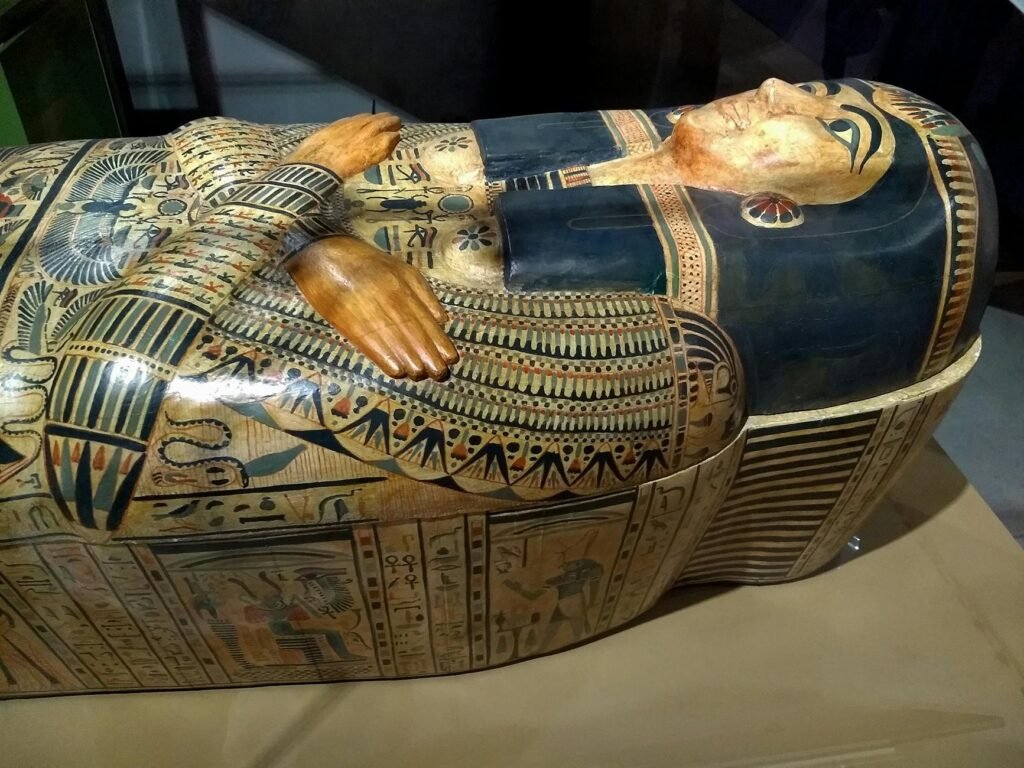
20 Ancient Egypt Secrets They Never Told You
For centuries, Ancient Egypt has captured the world’s imagination. The land of the pharaohs, pyramids, and sacred mysteries remains one of the most studied—and misunderstood—civilizations in human history. While documentaries often repeat the same well-known stories, the real Egypt runs deeper. Beneath the desert sands lies a forgotten world of surprising inventions, shocking discoveries, and hidden truths that rarely make it into mainstream narratives.
In this article, we uncover 20 Hidden Ancient Egypt Facts, twenty surprising details that reveal just how advanced, complex, and extraordinary this civilization truly was.
This is Yekare History, where the past comes alive. Don’t forget to explore our Yekare History Shop, follow us on YouTube, join us on Facebook, and watch our videos on TikTok for more untold stories from across the world.
1. The Egyptians Invented the First Known Police Force
Most people imagine ancient Egypt as peaceful and orderly, but that order was not accidental. Egypt created one of the earliest structured police forces, complete with officers, dogs, and even trained monkeys to help catch thieves. Some worked in markets, others along the Nile, enforcing the laws of Ma’at—balance and justice.
2. Cleopatra Was Not Egyptian
This still surprises many: Cleopatra VII, the last ruler of Egypt, was of Macedonian Greek descent, born into the Ptolemaic Dynasty established after Alexander the Great’s conquest. She embraced Egyptian culture deeply, even learning the language, but bloodline-wise, she wasn’t Egyptian.
3. Egyptians Loved Board Games
Games weren’t just entertainment—they were spiritual. The most popular was Senet, a board game representing the journey to the afterlife. Pharaohs were buried with their game boards, believing winning strategies would help them navigate the realm of the dead.
4. They Practiced Medical Surgery Thousands of Years Before Europe
Ancient medical papyri reveal that Egyptian doctors performed surgeries, set broken bones, stitched wounds, and understood anatomy so well that Greek scholars later studied in Egyptian temples. Their medical treatments—like honey bandages—are still scientifically effective today.
5. The Pyramids Were Not Built by Slaves
Archaeological evidence proves that pyramid builders were paid laborers, not slaves. They lived in organized worker villages, received food, medical care, and sometimes even burial honors. The great pyramids were a national project—built by Egyptians for Egypt.
6. Egyptians Had a Fully Developed Postal System
Messages and goods were transported by trained couriers using a network of roads and Nile routes. Workers, priests, and nobles used written letters—some of which still survive today—to communicate across long distances.
7. They Used Antibiotics Long Before Modern Science
Egyptians applied moldy bread to wounds, unknowingly using early forms of penicillin. They also used garlic, onions, and beer as medicinal treatments for infections, stomach problems, and fatigue.
8. Egyptians May Have Created the First Labor Strike
During the reign of Ramses III, workers building royal tombs walked off the job when their grain payments were delayed. They sat near a temple in protest—documented by scribes as the first recorded labor strike in human history.
9. Pyramid Alignment Shows Advanced Astronomy
The Great Pyramid of Giza aligns almost perfectly to true north, off by only 3/60th of a degree. This accuracy would be difficult even today without advanced tools, suggesting Egyptians understood the stars with extraordinary precision.
10. Egyptians Used Contraception
Papyrus documents from around 1500 BCE describe mixtures of crocodile dung, honey, and acacia used as early contraceptives. Strange as it sounds, acacia releases lactic acid—an ingredient found in modern spermicides.
11. There Were Female Pharaohs Long Before Cleopatra
Many women ruled Egypt: Hatshepsut, Sobekneferu, Twosret, and more. Hatshepsut even portrayed herself with a false beard and male titles to solidify her power, proving Egypt allowed exceptional women to rise long before Europe did.
12. Many Egyptians Were Multilingual
Egyptians communicated in at least three major scripts: hieroglyphs, hieratic, and later demotic. Priests, scribes, and merchants often spoke foreign languages, especially during trade with Nubia, the Levant, and the Mediterranean.
13. Cats Weren’t the Only Sacred Animals
Cats are famous, yes—but Egyptians also revered ibises, crocodiles, baboons, falcons, bulls, and even beetles. Each represented a god or a cosmic force. Many households raised sacred animals that were mummified upon death.
14. Egypt Had the First Recorded Peace Treaty
After years of war with the Hittites, Pharaoh Ramses II signed a peace treaty around 1259 BCE—the earliest surviving written peace agreement in history. A copy hangs at the United Nations Headquarters today.
15. Makeup Was Not Just for Beauty
Egyptian eyeliner (kohl) was actually medicinal. The lead compounds created a mild immune response that protected the eyes from infections. Both men and women wore it—beauty and health combined.
16. Egyptians Had Job Specialisations as Complex as Modern Societies
There were:
– Dentists
– Sculptors
– Cattle counters
– Embalmers
– Shipbuilders
– Perfume makers
– Beer brewers
– Professional mourners
– And even makeup artists
Egypt wasn’t just a land of farmers—it was an advanced, specialized economy.
17. Pharaohs Had “Taster Slaves” to Avoid Poison
To prevent assassination, some pharaohs used food tasters to test meals before they ate. Poisoning was rare but feared among royal circles.
18. Egyptians Measured Time with Extreme Accuracy
They used sundials, water clocks, and astronomy to divide days into 24 hours. Their accuracy helped regulate temple rituals, agriculture, and navigation along the Nile.
19. They Believed the Heart, Not the Brain, Controlled Thought
During mummification, embalmers removed the brain through the nose and discarded it—believing it was useless. The heart, however, was left untouched because it was considered the seat of memory, intelligence, and emotion.
20. The Oldest Dress in the World Comes From Egypt
The Tarkhan dress, discovered in a tomb south of Cairo, is over 5,000 years old. Perfectly tailored with pleats, it proves Egyptians had advanced fashion and textile design long before other civilizations.
Why These Facts Matter
Ancient Egypt wasn’t just a civilization.
It was a masterpiece of human ingenuity.
They built monuments that defy time, developed scientific knowledge centuries ahead of others, and created cultural systems that shaped the world. Yet so many of their hidden achievements remain overshadowed by myths.
By exploring these lesser-known facts, we gain a clearer picture: Egypt was not mysterious because it was primitive—it was mysterious because it was extraordinary.
Support Yekare History
If you enjoy deep, well-researched stories like this, support the Yekare History ecosystem:
???? Shop:
Explore historical T-shirts, posters, hoodies, and accessories at the Yekare History Shop—perfect for lovers of world history.
▶️ YouTube:
Subscribe to Yekare History on YouTube for documentaries, historical breakdowns, and short explainers.
???? Facebook:
Join our growing Facebook community for daily stories, facts, and discussions about the past.
???? TikTok:
Follow us on TikTok for fast, engaging history videos that put the ancient world in your pocket.
Final Thought
Ancient Egypt remains one of humanity’s most important cultural legacies. The more we uncover, the more we realize how little we truly know. These hidden facts remind us of a simple truth:
History is not just what happened—it’s what we discover.
And at Yekare History, we’re committed to discovering it all.